Why families trust MTZ with a Saudi scholarship application
MTZ is a SECP-registered, ISO 9001:2015 certified Pakistani consultancy whose counsellors are British Council certified, led by a CEO with 25+ years of personal experience guiding Pakistani students abroad.

ISO 9001:2015 Certified

SECP Registered

British Council Certified Counsellors

25+ Years of CEO Experience
Spotted an error on this page? WhatsApp +92 315 155 5507. MTZ corrects verified errors within 24 hours.
quick answer
Saudi Arabia scholarships for Pakistani students, in short
Pakistani students can study in Saudi Arabia fully funded through three real routes, and the government route runs entirely on one official portal.
Yes. Saudi Arabia scholarships for Pakistani students are real and fully funded. Three routes exist: the Saudi Ministry of Education scholarship across 27 public universities through the Study in Saudi portal, the KAUST Fellowship for MS and PhD, and King Saud University. Full awards cover tuition, housing, a monthly stipend, healthcare and an annual air ticket. The government route excludes medical specialties.
Saudi Arabia scholarships at a glance
Every figure below is verified at the Saudi Ministry of Education and KAUST official sources, with the medical exclusion stated up front so no family is misled.
Funder and managing body
Saudi Ministry of Education (moe.gov.sa)
Public universities covered
27 public universities across the Kingdom
Study levels
Diploma, Bachelor’s, Master’s and PhD (KAUST funds MS and PhD only)
Main routes
Study in Saudi government scholarship; the KAUST Fellowship; King Saud University and other public universities
How you apply
One account on the official Study in Saudi portal, studyinsaudi.moe.gov.sa
What full awards cover
Tuition-free study, housing, a monthly stipend, healthcare and an annual return air ticket
KAUST Fellowship value
KAUST states a total worth of USD 70,000 to 80,000 per year for MS and PhD students
Age limits (Ministry of Education)
Bachelor’s 17 to 25, Master’s up to 30, PhD up to 35
English requirement
KAUST requires IELTS 6.5 or TOEFL iBT 79; other universities vary, so confirm yours on the portal
Application window
Once a year in spring, roughly April to May, study starting in September; the 2026 cycle has closed, so check the portal for the next window
Important limit
The government scholarship route excludes health and medical specialties, so it is not an MBBS route
The three routes a Pakistani student can take
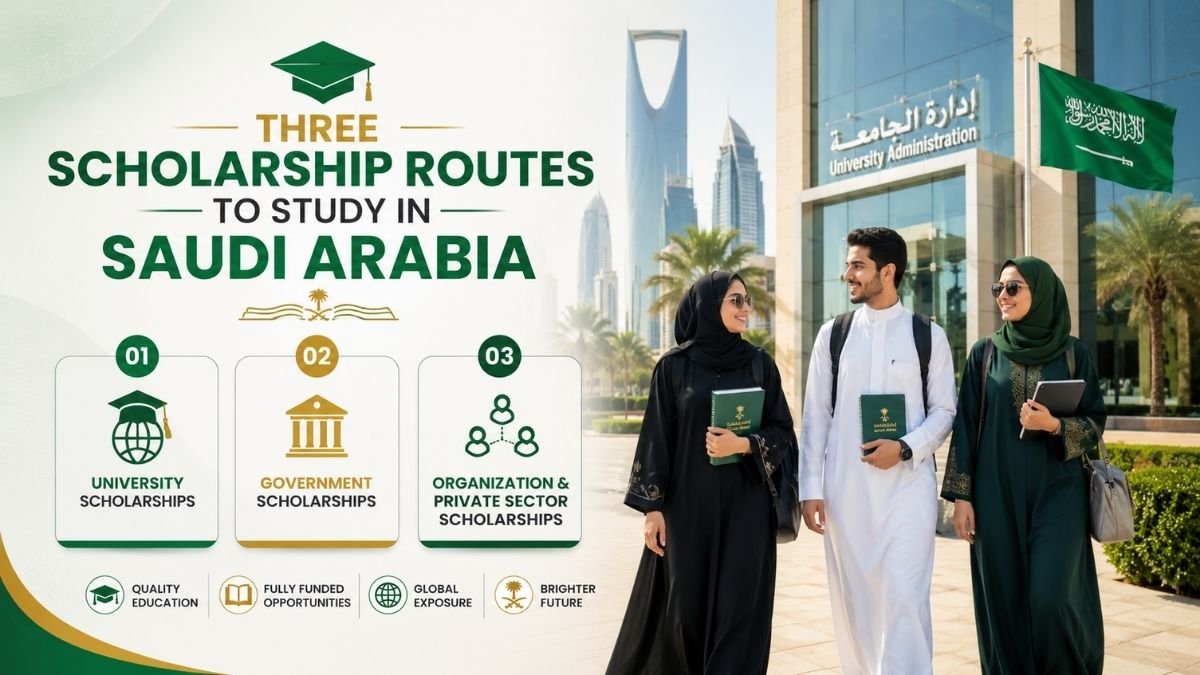
A Pakistani student can reach Saudi Arabia through three real routes: the Saudi government scholarship across 27 public universities, the KAUST Fellowship for research degrees, and King Saud University with its peer public universities.
The Study in Saudi government scholarship
The Saudi Ministry of Education funds international students across 27 public universities, and Pakistani applicants reach all of them through one portal at studyinsaudi.moe.gov.sa. Awards come in three tiers: a free scholarship with full benefits, a partial scholarship with some benefits, and a paid grant. The free tier is the fully funded one, covering tuition-free study, housing, a financial reward on arrival, healthcare, and an annual return air ticket. This route opens Diploma, Bachelor’s, Master’s and PhD study, but it does not cover health and medical specialties, so it is not a way into MBBS.
The KAUST Fellowship for MS and PhD
Every student admitted to the King Abdullah University of Science and Technology automatically receives the KAUST Fellowship, with no separate scholarship form to file. The KAUST scholarship for Pakistan applicants covers full tuition and bench fees worth about USD 35,000 a year, a monthly stipend worth about USD 20,000 a year for MS and PG Diploma students and USD 25,000 to 30,000 a year for PhD students, on-campus housing worth about USD 7,000 a year with utilities, health insurance and relocation support. KAUST puts the total worth at USD 70,000 to 80,000 a year. It funds MS and PhD research degrees in science, engineering and technology only, and it is open to all nationalities.
King Saud University and other public universities
The King Saud University scholarship is the fully funded programme at Riyadh’s oldest public university, founded in 1957, and it spans Diploma, Bachelor’s, Master’s and PhD study. The package broadly covers tuition, on-campus housing, a monthly stipend, health cover and a return air ticket, with the exact stipend confirmed by the university at offer stage. King Saud University is one of five Saudi public universities ranked in the QS World Top 500, alongside KAUST, King Fahd University of Petroleum and Minerals, King Abdulaziz University and Imam Muhammad ibn Saud Islamic University. You reach all of them through the same Study in Saudi portal.
Who can apply from Pakistan
Pakistani nationals are eligible for Saudi scholarships at Bachelor’s, Master’s and PhD level, provided they meet the academic, language and conduct conditions each university and the Ministry of Education set. This block states who can apply; the documents you submit sit in the next-but-one block.
Pakistani nationals can apply. The KAUST Fellowship is open to all nationalities, and the Ministry of Education scholarship admits students from more than 200 countries, so Pakistan is not excluded on any of the three routes.
A Bachelor’s degree opens Master’s entry and a Master’s degree opens PhD entry. For the government route the admission standards that apply to Saudi students apply to scholarship students, with all certificates attested. KAUST sets a minimum GPA of 3.0 on a 4-point scale, and reports that most admitted students sit above 3.3.
KAUST requires IELTS 6.5 or TOEFL iBT 79 for its English-taught research degrees. Other universities set their own thresholds, and Arabic-taught programmes need Arabic, so confirm the exact requirement for your chosen university on the portal before you apply. Do not assume any route waives an English test.
The Ministry of Education requires that your home government approves the study where Pakistan requires it, that you do not already hold another scholarship from a Kingdom institution, that you have not been dismissed from a Kingdom institution, that you supply a certificate of no criminal record from your home security services, and that you pass the prescribed medical examination.
The government scholarship route covers most specialisations but excludes health and medical specialties. If your goal is MBBS, this route does not serve it, and our MBBS in China pages are the honest place to look instead.
The Ministry of Education publishes age bands: Bachelor’s applicants 17 to 25, Master’s up to 30, and PhD up to 35. KAUST sets a minimum age of 18 at entry. Age rules can shift, so confirm the current limit for your university on the official portal. Your MTZ enquiry form shows no age cutoff.
How you apply from Pakistan: one portal, no paid agent
Ministry of Education has warned applicants against paying any agent to submit on their behalf. This single-portal route is what makes the Saudi government scholarship simpler to start than most government schemes.
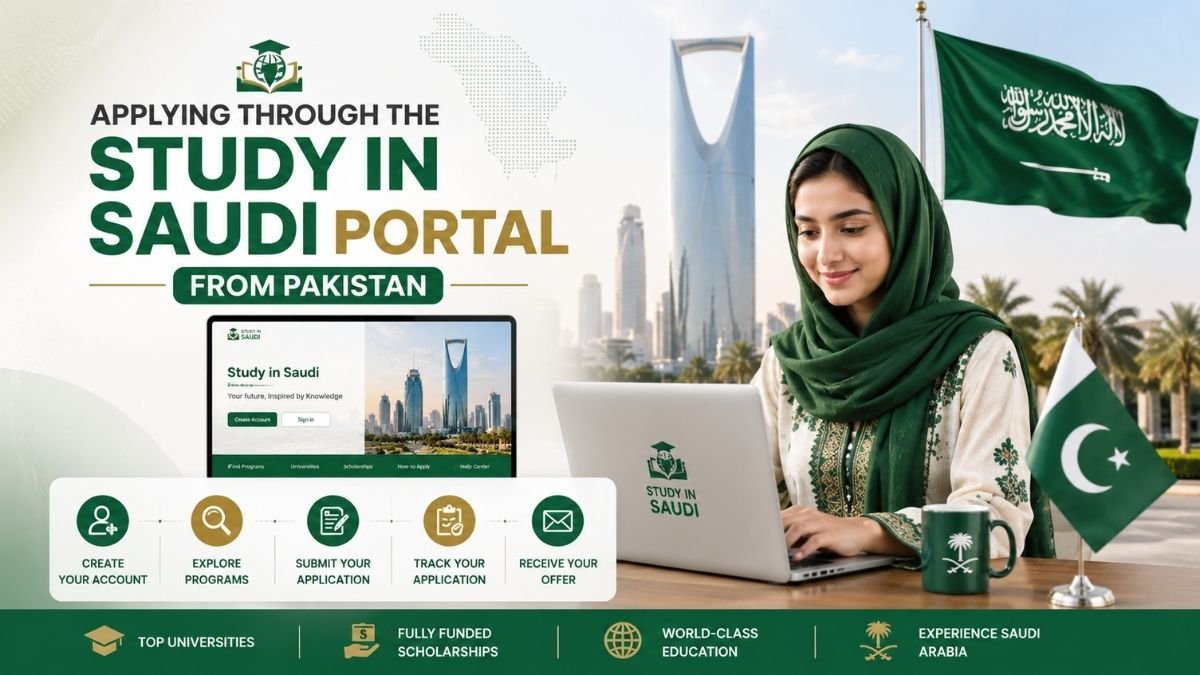
The portal route:
You create one account on the Study in Saudi portal, complete your profile once, upload your documents once, and rank several universities and programmes by preference in a single application. The portal forwards your visa request to the Ministry of Foreign Affairs once a university accepts you.
The older official alternative:
Where you cannot use the portal, the Ministry of Education also lets you apply through the university directly, or through the Saudi Cultural Attache in your country, or through the Embassy of Saudi Arabia where there is no attache.
KAUST works differently:
For the KAUST Fellowship there is no scholarship form at all. You apply for a degree on the KAUST admissions portal, and admission carries the fellowship automatically in your offer letter.
The Ministry of Education has repeatedly warned that any third party charging a fee to submit your application on the portal is unauthorised. MTZ guides you through the free official portal and helps you prepare a strong application. MTZ never charges to submit on the portal for you and does not award or guarantee any scholarship
The documents you submit
You submit a single document set once on the portal, and the core of it is fixed by the Ministry of Education: attested certificates, a police clearance, and a passed medical examination. This block lists what you upload; whether you qualify sits in the Eligibility block above.
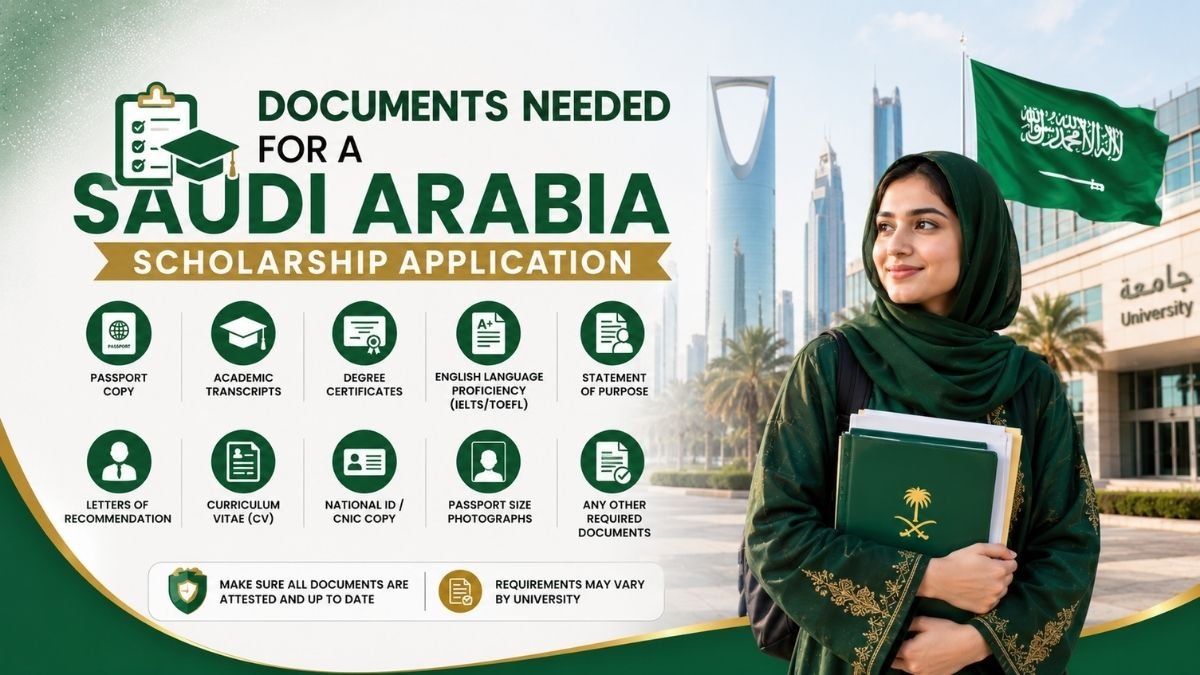
⚫ Valid passport: A passport valid well beyond your intended entry date, uploaded with your profile photo at the start of the portal application.
⚫ Attested academic certificates and transcripts: Your degree and result documents, attested by the competent authorities the university names. This is a Ministry of Education condition for scholarship students.
⚫ Police clearance certificate: A certificate of no criminal record from your home-country security services, required by the Ministry of Education.
⚫ Medical examination: You must pass the medical examination set by the regulations. The university confirms the exact medical report it wants after you are shortlisted.
⚫ Curriculum vitae and statement of purpose: A short CV and a clear motivation statement, expected for Master’s and PhD applications and for research routes such as KAUST.
⚫ Recommendation letters: KAUST asks for three referees, contacted through its admissions portal. Other universities may request a recommendation; confirm yours on the portal.
What the funding covers, and what it does not
A full Saudi award covers your tuition, housing, a monthly stipend, healthcare and a yearly air ticket, while visa fees and personal spending beyond the stipend stay with you. Figures below are in each scheme’s own currency, with rupee amounts indicative only.
covered:
⚫ Tuition: Tuition-free study on the free government scholarship tier. KAUST covers full tuition and bench fees worth about USD 35,000 a year.
⚫ Monthly stipend: A monthly living allowance. KAUST states about USD 20,000 a year for MS and PG Diploma students and USD 25,000 to 30,000 a year for PhD students, depending on qualifications and progress.
⚫ Housing: On-campus housing. KAUST values this at about USD 7,000 a year including utilities such as electricity and wifi.
⚫ Healthcare: Health insurance for the student, with cover for eligible dependents on some routes, though dependent medical and dental cover can carry a charge.
⚫ Travel: An annual return air ticket on the government route, and relocation and visa support at KAUST.
⚫ Total worth: KAUST puts the full fellowship at USD 70,000 to 80,000 a year.
Not covered:
⚫ The educational entry visa fee: Stays your responsibility, processed after acceptance.
⚫ Personal spending beyond the stipend: And any travel outside the official programme terms.
⚫ Dependent housing upgrades or dependent medical and dental cover: At KAUST, where charges may apply.
⚫ Medical and health degrees: Not funded on the government scholarship route at all.
The Ministry of Education offers three tiers: a free scholarship with full benefits, a partial scholarship with only some benefits, and a paid grant. Only the free tier is fully funded, so check which tier your offer carries before you accept. Rupee equivalents are indicative only; exchange rates move, so confirm current figures with MTZ on WhatsApp before any payment or financial decision.
How to apply, step by step
You apply in five steps on one portal, and the whole government route runs through studyinsaudi.moe.gov.sa from a single account. These steps cover the process; your document list sits in the Documents block above.
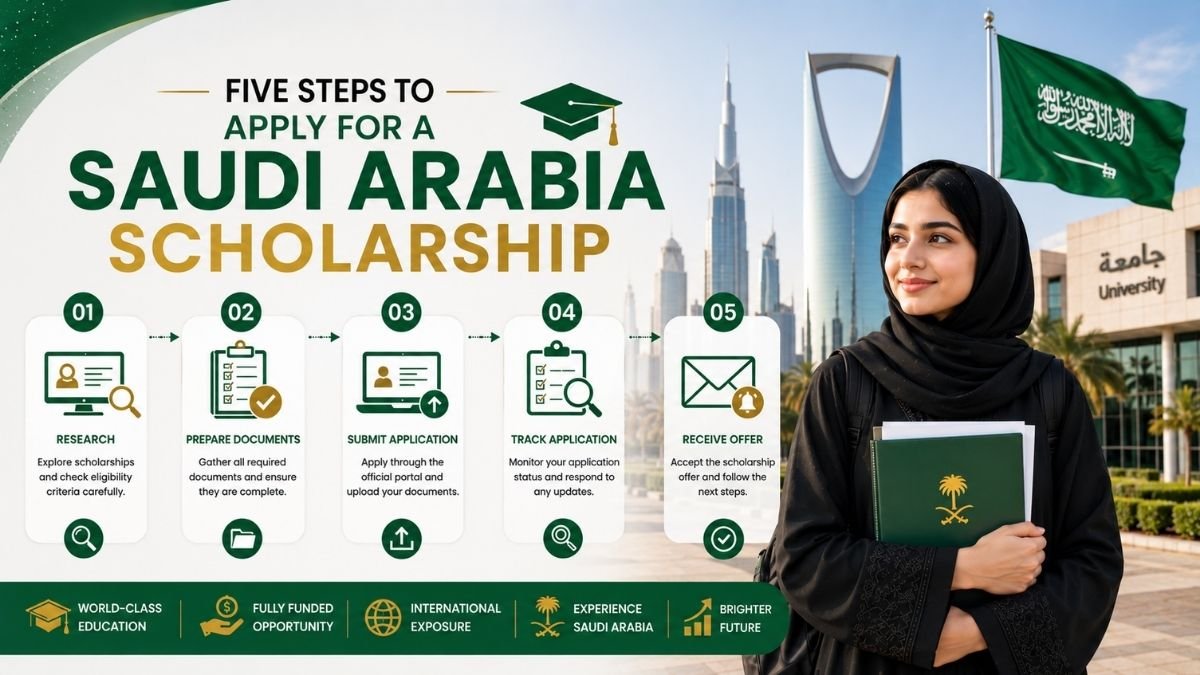
step-1 →
Create your portal account. Register on the Study in Saudi portal with a valid email, verify it, and complete your profile to 100 percent before you can apply, since an incomplete profile blocks submission.
step-2 →
Choose your universities and programmes. Browse the participating public universities, pick a programme that fits your field, and rank several universities by preference in one application. For KAUST, apply on its own admissions portal instead, where admission carries the fellowship.
step-3 →
Upload and submit. Attach your prepared documents in the format the portal asks for, in clear high-resolution scans, then submit before the cycle closes. Poor scans are a common cause of rejection.
step-4 →
Track and interview. Follow your status on the dashboard as it moves through review. Shortlisted applicants may be asked for an online or in-person interview before any decision.
step-5
Accept and process your visa. On acceptance, confirm your offer, and the portal forwards your visa request to the Ministry of Foreign Affairs. You then finalise visa stamping at the nearest Saudi mission.
The Study in Saudi cycle opens once a year in spring, roughly April to May, with study starting in September. The 2026 cycle has closed. MTZ confirms the live dates for the next cycle with you before you start, so you do not miss the window.
How MTZ helps your application
MTZ guides you through the free official portal from profile to visa, and the work is preparation and honest advice, never a paid submission and never a promise of selection. MTZ does not award or guarantee any scholarship.
Before anything else, MTZ reads your transcripts, degree level and English position against what each route asks, and tells you plainly whether Saudi Arabia is a realistic fit or whether another destination serves you better.
Picking the most famous name is a common mistake. MTZ matches your field and grades to the public universities where you stand a real chance, and flags whether KAUST research entry or a King Saud University programme fits your profile.
Weak scans and thin motivation statements sink strong candidates. MTZ helps you assemble attested certificates, a clean CV, a focused statement of purpose, and high-resolution uploads that pass the portal’s checks
MTZ walks you through your own Study in Saudi account so you submit on the official portal yourself, the way the Ministry of Education requires, with no unauthorised paid submission.
Once a university accepts you, MTZ helps you follow the portal’s visa step to the Ministry of Foreign Affairs and prepare for stamping at the nearest Saudi mission, then briefs you on arrival, the Iqama and settling in.
Start with the free scholarship eligibility assessment:
The honest limits you should weigh first
Saudi scholarships are real and fully funded, but they are competitive, they exclude medical degrees on the government route, and no consultancy can promise you a seat. Read these limits before you set your heart on the Kingdom.
Read these limits before you apply.
No guarantee, ever: Selection is decided by the universities and the Ministry of Education through a competitive process, and meeting the minimum requirements does not guarantee an offer. MTZ does not award or guarantee any scholarship.
Not a route to MBBS: The government scholarship route excludes health and medical specialties, so if your goal is a medical degree this is not your path. Our MBBS in China pages are the honest place to look instead.
One main intake a year: The Study in Saudi cycle opens once a year in spring. Miss the window and you wait roughly a year for the next one, so timing matters.
English tests still apply: KAUST requires IELTS 6.5 or TOEFL iBT 79, and other universities set their own thresholds. Do not assume any route waives an English test until you confirm it.
Tier matters: A partial offer is not the same as a full award. Check whether your offer is the free tier with full benefits or a partial one before you accept.
Cultural and practical fit: Study in the Kingdom comes with its own cultural setting and rules. Weigh that honestly for yourself and your family before you commit six figures of time and effort.
The three routes compared
The fastest way to see your fit is side by side: the government route is broad and tuition-free, KAUST is the richest package but research-only, and King Saud University sits in between with full-degree breadth. The middle column highlights the route most Pakistani applicants start with.
| What you are comparing | Study in Saudi government scholarship | KAUST Fellowship | King Saud University |
|---|---|---|---|
| Levels | Diploma, Bachelor’s, Master’s, PhD | MS and PhD only | Diploma, Bachelor’s, Master’s, PhD |
| Fields | Most specialisations, no medical | Science, engineering, technology | Broad, including Sharia, sciences, business |
| Funding worth | Tuition-free plus housing, stipend, healthcare, air ticket | USD 70,000 to 80,000 a year (KAUST stated) | Full package, stipend confirmed at offer |
| How you apply | Study in Saudi portal, one account | KAUST admissions portal, fellowship automatic | Through the Study in Saudi portal |
| English | Varies by university, confirm on portal | IELTS 6.5 or TOEFL iBT 79 | Confirm on portal |
| Best for | Bachelor’s and PG across many universities | Research-focused MS and PhD candidates | Full-degree study at a top Riyadh university |
| Not for | Medical or health degrees | Bachelor’s applicants | Applicants needing a guaranteed seat |
For a broader picture of every funded country option, see the MTZ global scholarships hub:
Saudi Arabia scholarship questions Pakistani families ask
Short, honest answers to what Pakistani students and parents ask most about studying in Saudi Arabia on a scholarship. Each answer leads with the direct answer, then adds detail.
Yes. Pakistani students can study in Saudi Arabia fully funded. The KAUST Fellowship is open to all nationalities, and the Saudi Ministry of Education scholarship admits students from more than 200 countries across 27 public universities, so Pakistan is included on every main route.
You apply through one official portal, studyinsaudi.moe.gov.sa. You create a single account, complete your profile, upload your documents once, and rank several universities and programmes. For the KAUST Fellowship you apply on the KAUST admissions portal instead, where admission carries the fellowship automatically.
No. Applying through the official Study in Saudi portal is free. The Ministry of Education has warned that any third party charging a fee to submit your application for you is unauthorised, so you never pay anyone to apply on the portal.
A full government award covers tuition-free study, on-campus housing, a monthly stipend, healthcare, and an annual return air ticket. The KAUST Fellowship covers full tuition and bench fees, a monthly stipend, housing, health insurance and relocation, which KAUST values at USD 70,000 to 80,000 a year.
No. The Saudi government scholarship route excludes health and medical specialties, so it is not a way into MBBS for international scholarship students. If a medical degree is your goal, our MBBS in China pages are the honest place to look instead.
The KAUST Fellowship is automatic funding for every admitted MS and PhD student at the King Abdullah University of Science and Technology. KAUST states full tuition and bench fees worth about USD 35,000 a year, a stipend of about USD 20,000 a year for MS students and USD 25,000 to 30,000 a year for PhD students, plus housing, health insurance and relocation.
It depends on the university. KAUST requires IELTS 6.5 or TOEFL iBT 79 for its English-taught research degrees. Other universities set their own thresholds and some accept alternative tests, and Arabic-taught programmes need Arabic, so confirm the exact requirement for your chosen university on the portal before you apply.
The King Saud University scholarship is the fully funded programme at Riyadh’s oldest public university, founded in 1957, covering Diploma, Bachelor’s, Master’s and PhD study. The package broadly includes tuition, housing, a stipend, health cover and a return air ticket, with the exact stipend confirmed by the university at offer stage. You apply through the Study in Saudi portal.
The Ministry of Education publishes these bands: Bachelor’s applicants 17 to 25, Master’s up to 30, and PhD up to 35. KAUST sets a minimum age of 18 at entry. Age rules can change, so confirm the current limit for your university on the official portal before you apply.
The cycle opens once a year in spring, roughly April to May, with study starting in September. The 2026 cycle has closed. Because dates shift each year, MTZ confirms the live dates for the next cycle with you so you do not miss the window.
No. You apply yourself on the free official portal, and the Ministry of Education has warned against paying any agent to submit for you. MTZ helps you prepare a strong application and walks you through your own portal account, without any unauthorised paid submission.
You upload a valid passport, attested academic certificates and transcripts, a police clearance certificate, and you must pass a medical examination. Master’s, PhD and KAUST applications also expect a CV, a statement of purpose and recommendation letters. Confirm your university’s exact checklist on the portal.
No. Selection is decided by the universities and the Ministry of Education through a competitive process, and meeting the minimum requirements does not guarantee an offer. MTZ does not award or guarantee any scholarship. MTZ assesses your profile honestly and helps you apply through the official process.
Sometimes. The Ministry of Education lists healthcare for accompanying family where the regulations allow, and KAUST offers married-student housing, though dependent housing and dependent medical or dental cover can carry a charge. Confirm what your specific university and award allow before you plan to bring family.
Start your Saudi Arabia scholarship application
Get an honest read on your chances before the next Study in Saudi window opens. Send MTZ your details and we will tell you whether Saudi Arabia fits your profile, then help you build an application that competes.
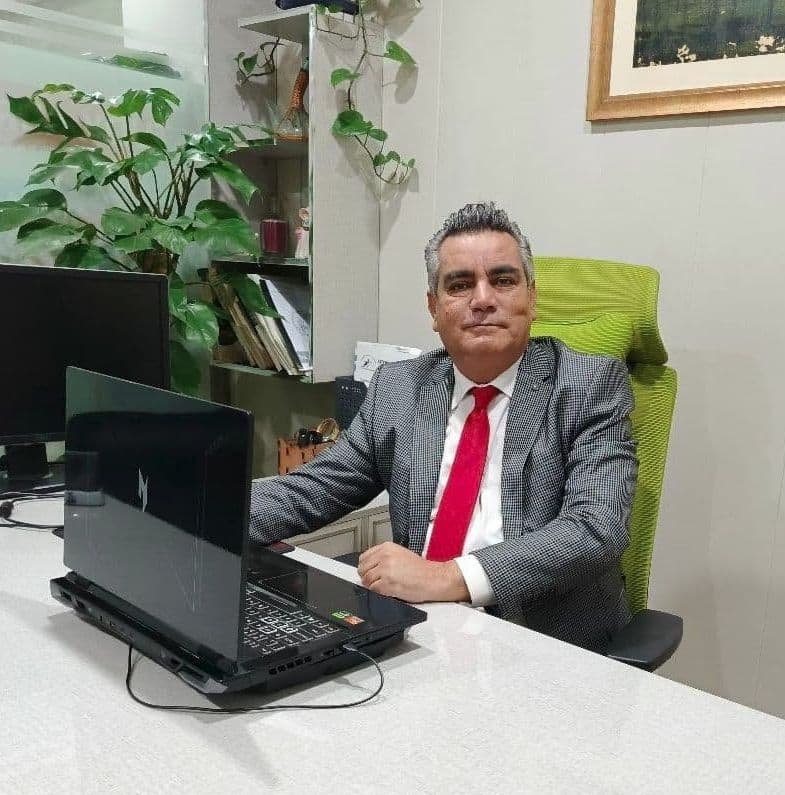
This page was written by Mubbashir Qureshi, CEO of MTZ Global Visa Consultants Pvt Ltd, drawing on 25+ years of personal experience guiding Pakistani students into study abroad and international education. MTZ Global Visa Consultants Pvt Ltd is a SECP-registered, ISO 9001:2015 certified Pakistani consultancy with British Council certified counsellors and offices in Islamabad and Lahore. The company was established in 2025; the 25+ years refers to the CEO’s personal experience, not the company.
Information on this page was verified at official sources on 12 June 2026, including the Saudi Ministry of Education and KAUST. Next review by 01 March 2027, before the next annual application window. Spotted an error on this page? WhatsApp +92 315 155 5507. MTZ corrects verified errors within 24 hours.