Why families trust MTZ with scholarships applications
MTZ is a SECP-registered, ISO 9001:2015 certified Pakistani consultancy whose counsellors are British Council certified, led by a CEO with 25+ years of personal experience guiding Pakistani students abroad.

ISO 9001:2015 Certified

SECP Registered

British Council Certified Counsellors

25+ Years of CEO Experience
Spotted an error on this page? WhatsApp +92 315 155 5507. MTZ corrects verified errors within 24 hours.
quick answer
Can Pakistani Students Get a Scholarship in Austria?
Yes, but not through one all-level scholarship. Pakistani students reach funded study in Austria mainly at PhD and research level: the HEC-OeAD funded PhD route, salaried doctoral positions, and the OeAD Ernst Mach research grant. At bachelor’s and master’s level there is no national full-ride; instead public-university tuition is low, only 726.72 euros per semester. MTZ helps you choose and apply through the right route.
Austria Scholarships at a Glance
Austria’s funded study for Pakistani students runs through four routes, three of them at PhD or research level, plus low-cost public-university tuition for degree study. Every figure below is verified at the official OeAD, HEC and university sources.
Best-funded levels
PhD and research
Main funded routes
HEC-OeAD PhD; salaried doctoral positions; OeAD Ernst Mach research grant
Managing bodies
OeAD in Austria; Higher Education Commission (HEC) in Pakistan
Ernst Mach grant
1,300 euros per month, for 1 to 9 months
Ernst Mach age limit
35 years (published by OeAD)
Ernst Mach deadline
1 February each year, for the next academic year
HEC-OeAD PhD allowance
1,000 euros per month (funded by HEC)
Public-university tuition, non-EU
726.72 euros per semester, plus about 25 euros student-union fee
English requirement
no fixed national test; each programme sets its own English or German rule
Intakes
winter (start October) and summer (start March)
Typical Vienna living cost
1,000 to 1,400 euros per month
MTZ role
profile assessment and application support; MTZ does not award or guarantee funding
Your Routes Into Funded Study in Austria
Pakistani students reach funded study in Austria through four routes, and choosing the right one depends on your study level and whether you already have an Austrian supervisor. Three routes fund PhD or research work; the fourth is a master’s scholarship that lists Pakistan but is not always open. Each route below names its funder, what it pays, and the official page where you confirm current terms.

The HEC-OeAD Funded PhD Route
This is the route built specifically for Pakistani PhD candidates, and it runs on an agreement between Pakistan’s Higher Education Commission and Austria’s OeAD. The Higher Education Commission (HEC) and the OeAD signed this agreement on 8 October 2003 and renewed it in November 2016. The OeAD selects, places and monitors the Pakistani PhD scholars, while the funding comes from the Pakistani government through HEC. You study at any public-sector Austrian university where the language of instruction is English, in any field where a suitable PhD supervisor is available. Scholars receive 1,000 euros per month as a maintenance allowance, and HEC pays the OeAD an administration fee of 1,250 euros per scholar per year. You apply when HEC advertises the route inside its Overseas Scholarship calls.
Salaried Doctoral Positions at Austrian Universities
This is the realistic full-funding route at PhD level, and it works as employment rather than a nationality scholarship. At Austrian public universities a doctoral candidate is hired as a scientific staff member with a monthly salary and social benefits under the university collective agreement, commonly at the B1 grade for around 30 hours per week. The University of Vienna alone advertises more than 40 funded doctoral positions in its science calls each cycle, and many positions are financed through the Austrian Science Fund (FWF). You apply to a specific advertised position and supervisor, on merit, with no Pakistan-specific quota. The exact monthly salary follows the current collective-agreement rate, which you confirm on the position advert.
The OeAD Ernst Mach Research Grant
The Ernst Mach Grant worldwide funds a short research stay in Austria, and it is open to applicants from every country except Austria, Pakistan included. The Austrian Federal Ministry funds it and the OeAD manages it. It pays 1,300 euros per month for a stay of 1 to 9 months, and non-European developing-country applicants, which includes Pakistan, may also receive a travel subsidy of up to 730 euros. Read the scope carefully: the OeAD states plainly that this grant cannot finance a full master’s or PhD programme. It suits a doctoral candidate or postdoctoral researcher who wants a defined research period in Austria and already has written confirmation of supervision from an Austrian professor.
The OeAD Master’s Scholarship for Developing-Country Graduates
The OeAD runs a master’s scholarship for graduates from non-European developing countries, and Pakistan appears on its eligible-country list. It supports a two-year master’s degree and requires an unconditional admission offer to an eligible Austrian master’s programme before you can hold the award. One honest caution applies: the OeAD currently shows no planned call for new applications, so treat this route as real but dormant, and check the call status at the official source before you build a plan around it.
Who Can Apply, and From Where
Eligibility for Austria’s funded routes turns on three things: your study level, whether you hold an Austrian supervisor’s confirmation, and which route you target. The accordion below sets out nationality, level, language, the Pakistan mechanism, field rules and age, route by route, so you can see exactly where you fit.
All four routes accept Pakistani nationals. The HEC-OeAD route is built specifically for Pakistani PhD scholars. The Ernst Mach grant accepts every nationality except Austrian. Salaried doctoral positions are open on merit with no nationality restriction.
Funded routes target PhD and research level: the HEC-OeAD route and salaried doctoral positions are for doctoral study, and the Ernst Mach grant is for doctoral or postdoctoral research stays. The OeAD developing-country scholarship is for a two-year master’s, when its call is open. There is no Austrian national scholarship that fully funds a bachelor’s degree.
Austria sets no single national language test. The Ernst Mach grant asks for sufficient English in your subject area and the supervisor’s confirmation that the project can run in English, with no compulsory IELTS or TOEFL certificate. Degree programmes and doctoral positions each set their own English or German requirement, so you confirm the rule on the specific programme or position page rather than assuming a blanket medium-of-instruction waiver.
You first secure an Acceptance Letter from a suitable Austrian supervisor at a public university teaching in English. HEC then advertises the route inside an Overseas Scholarship call, and a team of Austrian professors travels to Pakistan to interview only candidates who already hold that Acceptance Letter. Selected candidates complete degree verification, the HEC legal bond, study leave and admission. Watch hec.gov.pk for the advertised call.
None apply specifically to Pakistani applicants. The HEC-OeAD route, the salaried positions and the Ernst Mach grant all depend on a suitable supervisor accepting your project, so your field is limited only by supervisor availability. The OeAD master’s scholarship requires admission to an eligible master’s programme.
State only what the official body publishes. The Ernst Mach grant sets a published maximum age of 35 years at the start of the research stay. The HEC-OeAD route and salaried doctoral positions publish no Austrian age limit; HEC’s own call may set an age condition that changes between cycles, so verify the current age rule from the official HEC call. The MTZ enquiry form shows no age cutoff.
Why Bachelor’s and Master’s Study in Austria Is Low-Cost, Not Free
The single fact that shapes every Norway plan is that autumn 2023 ended free public study for non-EU students, and a 2025 reform has since made fees vary by university rather than disappear. Norway is not free again, so plan around the fee, not around the old myth.
Real advantage
Austria’s real advantage for Pakistani degree students is cheap public tuition, not a free pass, and one country rule decides whether you pay anything at all. Non-EU degree students at Austrian public universities pay 726.72 euros per semester, which is about 1,453 euros a year, plus a student-union fee of roughly 25 euros per semester. That figure is a fraction of United Kingdom, United States or Australian tuition.
Permanent tuition waiver
Here is the rule families most often get wrong. Austrian universities grant an automatic, permanent tuition waiver to nationals of the least developed countries on the OECD DAC list, with named examples including Afghanistan, Nepal and Somalia. Pakistan is a lower-middle-income country on that list, not a least developed country, so a Pakistani student is not automatically exempt and pays the 726.72 euros per semester as standard.
Waiver possiblity
A waiver is still possible in specific cases, decided by each university, for example for certain scholarship holders, for exchange and partnership programmes, or on individual circumstances. Because it is a university-by-university decision, you confirm it with the admissions office of your chosen Austrian university rather than assuming it.
Honest limit: Pakistan is not a least developed country, so the automatic Austrian tuition waiver does not apply to you. Plan for 726.72 euros per semester at a public university unless your specific university confirms a waiver in writing.
Documents You Will Need
The exact document set depends on your route, but every Austria funding route shares a core of identity and academic papers you prepare first. The lists below cover only what you submit, and every item is confirmed at the official OeAD or HEC source. Who qualifies sits in the Eligibility section above, not here.
Shared core (all routes):
⚫ Valid biometric passport
⚫ Academic transcripts and degree certificates
⚫ An English or German copy of any document not already in English or German (the OeAD accepts a rough translation alongside the original; a certified translation is not required for Ernst Mach)
⚫ Letters of recommendation on official letterhead, each carrying a date, signature and institutional stamp, none older than six months
HEC-OeAD funded PhD route adds:
⚫ An Acceptance Letter from a suitable supervisor at a public Austrian university teaching in English
⚫ Degree verification as required by HEC
⚫ The HEC legal bond
⚫ Study-leave approval where you are employed
⚫ Admission documents the university requests
OeAD Ernst Mach research grant adds:
⚫ The supervisor’s written confirmation of supervision, on the OeAD template where possible, signed, dated and stamped (this is separate from a recommendation letter, and a supervisor cannot supply both)
⚫ Your planned research details entered in the online application, meeting the stated minimum word counts
Salaried doctoral position adds:
⚫ A curriculum vitae and the motivation or research statement the position advert requests
⚫ Referee contacts or letters as set by the advertising university
OeAD developing-country master’s scholarship adds:
⚫ An unconditional admission offer to an eligible Austrian master’s programme (held before the award), submitted when a call is open
What Each Route Pays For
Funding in Austria differs sharply by route, so it helps to see what each one covers and what it leaves to you. Figures are shown in euros, the currency the funders use, and an indicative rupee note sits at the foot of this block.
HEC-OeAD funded PhD route
Covered
⚫ A maintenance allowance of 1,000 euros per month, paid through the HEC arrangement, with the OeAD handling placement and monitoring.
Not covered
⚫ Not covered by the allowance alone: full Vienna living costs. Typical Vienna living runs 1,000 to 1,400 euros per month, so the allowance is support rather than a full salary, and you plan for the gap.
Salaried doctoral position
Covered
⚫ a monthly salary plus social benefits under the university collective agreement, because you are employed, not stipended. This is the route that comes closest to full funding at PhD level.
Not covered
⚫ nothing beyond a normal employment package; you confirm the exact salary on the position advert.
OeAD Ernst Mach research grant
Covered
⚫ 1,300 euros per month for a 1 to 9 month research stay, plus a travel subsidy of up to 730 euros for non-European developing-country applicants, which includes Pakistan, plus OeAD help arranging accommodation and insurance.
Not covered
⚫ a full degree, and not necessarily all your costs. The OeAD states that living costs in Austria are usually higher than the grant, so you need your own funds for items such as health insurance, the residence-permit funds proof, travel and an accommodation deposit.
OeAD developing-country master’s scholarship
Covered
⚫ support toward a two-year master’s, per the scheme terms, when a call is open.
Not covered
⚫ current availability. The OeAD shows no planned call, so treat the funding as real but dormant until the official source confirms an open round.
Public-university tuition (degree study): non-EU students pay 726.72 euros per semester, plus about 25 euros student-union fee. See the standalone tuition-rule block above for why Pakistani students are not automatically exempt.
All amounts above are in euros, the funders’ own currency. Any rupee figure is indicative only. Convert using a conservative rate to allow for exchange-rate movement, and WhatsApp MTZ Islamabad or Lahore for the current rupee breakdown before you make any payment decision. MTZ does not publish a fixed rupee table for this page.
How to Apply, Step by Step
Applying to Austria is a sequence, and the entry point changes with your route, so this is the order that works for a Pakistani applicant. The steps below stay about process; your document checklist is in the Documents section above. MTZ confirms the live dates for each cycle with you, because they shift year to year.
step-1 →
Choose your route and level.
Decide whether you are heading for a PhD (HEC-OeAD route or a salaried doctoral position), a research stay (Ernst Mach grant), or a master’s (the OeAD developing-country scholarship, when open). Your level decides everything that follows.
step-2 →
Secure your Austrian anchor.
For the three research and PhD routes, you first win an Austrian supervisor’s agreement: a confirmation of supervision for Ernst Mach, or an Acceptance Letter for the HEC-OeAD route and most salaried positions. For the master’s route, you instead secure an unconditional admission offer to an eligible programme. Browse Austrian university institute pages and approach professors directly.
step-3 →
Prepare and check your file.
Assemble the documents listed in the Documents section, confirm each is current and correctly signed and stamped, and add the English or German translations where needed. A file that is complete and on time is what survives the formal check.
step-4 →
Submit through the right portal, on time.
The Ernst Mach grant uses the OeAD online application, with the annual deadline on 1 February for stays in the following academic year that starts in September or October. The HEC-OeAD PhD route opens inside HEC’s advertised Overseas Scholarship calls at hec.gov.pk, so you submit when that call runs. Salaried positions are submitted to the advertising university by the advert’s own closing date. Public-university degree intakes start in October (winter) and March (summer). MTZ confirms the live dates for your route.
step-5
Interview, selection and arrival.
For the HEC-OeAD route, a panel of Austrian professors interviews candidates in Pakistan who already hold an Acceptance Letter, then HEC completes verification, the legal bond, study leave and admission. Ernst Mach results are published around early July. Once selected, start your visa and residence-permit steps early, because for stays longer than six months the process can take several months.
How MTZ Helps You Apply
MTZ does not award funding and does not run any Austrian or HEC scheme; what MTZ does is prepare you to compete and apply through the official process yourself. The support below runs from a first honest read of your profile to the visa stage, and you can take all of it or only the parts you need.
MTZ reviews your degree, grades, research interest and target level, then tells you straight which Austria route fits, the HEC-OeAD PhD route, a salaried doctoral position, the Ernst Mach research grant, or a master’s path, and where your profile is currently weak. If Austria is not your strongest option, MTZ says so.
Because every research and PhD route turns on an Austrian supervisor, MTZ helps you identify suitable institutes and professors to approach and shape the way you present your research idea to them. You make the contact; MTZ helps you make it well.
MTZ helps you assemble and check the file against the official requirement: transcripts, translations, recommendation letters with the correct date, signature and stamp, the research outline for Ernst Mach, and the CV and statement a salaried position asks for. The aim is a file that passes the formal check first time.
MTZ guides you through the correct portal for your route, the OeAD online application for Ernst Mach, the HEC Overseas Scholarship call for the HEC-OeAD route, or the university system for a salaried position, and keeps you to the live deadline.
After selection, MTZ helps you plan the student visa and residence-permit steps in good time, since stays longer than six months can take several months to process from Pakistan.
Start with the free scholarship eligibility assessment:
The Honest Limits You Should Know
Austria is a strong, low-cost destination, but it is honest to say where it does not stretch, so you plan with open eyes. None of the points below is a reason to avoid Austria; each is a reason to choose the right route and budget for the gaps.
No single all-level scholarship. Austria has no national award that fully funds a bachelor’s or master’s degree the way some other countries do. Full funding sits at PhD and research level.
No automatic tuition waiver for Pakistan. Pakistan is a lower-middle-income country, not a least developed country, so the automatic Austrian public-university waiver does not apply to you. Plan for 726.72 euros per semester unless your university confirms a waiver in writing.
The HEC allowance is support, not a full salary. At 1,000 euros per month it sits below typical Vienna living costs of 1,000 to 1,400 euros per month, so you budget for the difference.
Ernst Mach is a research stay, not a degree. The OeAD states it cannot fund a full master’s or PhD programme, and it expects you to hold your own funds for insurance, residence-permit proof, travel and an accommodation deposit.
The OeAD master’s scholarship is dormant. Pakistan is listed, but the OeAD shows no planned call, so do not build a plan around it until the official source confirms an open round.
Funders decide, not MTZ. Selection for every route is decided by the funders and the universities. MTZ does not award or guarantee any scholarship, place or salary.
Comparing Your Austria Funding Routes
The fastest way to choose is to lay the routes side by side, because they differ on level, funding and how Pakistan-specific they are. Read across the row that matches your study level, then confirm the live detail on that route’s official page.
| Route | Best for | Funder | What it pays | Pakistan-specific | Honest note |
|---|---|---|---|---|---|
| HEC-OeAD funded PhD | PhD candidates with a supervisor | HEC (Pakistan), placed by OeAD | 1,000 euros per month maintenance | Yes, built for Pakistani scholars | Allowance below full Vienna living cost |
| Salaried doctoral position | PhD candidates on merit | The hiring university or FWF | Monthly salary plus benefits | No, open to all on merit | Closest to full funding; salary set by advert |
| Ernst Mach research grant | Doctoral or postdoctoral research stays | Austrian Federal Ministry, run by OeAD | 1,300 euros per month, 1 to 9 months, up to 730 euros travel | Open to all non-Austrian, Pakistan eligible | Research stay only, not a degree |
| OeAD master’s scholarship | Master’s applicants from developing countries | OeAD | Support for a two-year master’s | Pakistan listed | No planned call at present; dormant |
| Public-university tuition | Bachelor’s and master’s degree study | Not a scholarship | You pay 726.72 euros per semester | No automatic Pakistan waiver | Low cost, not free, for Pakistani students |
Austria Scholarship Questions Pakistani Families Ask
These are the questions Pakistani applicants and parents ask most about funded study in Austria, answered straight and from official sources. Each answer leads with the direct answer, then adds the detail you need to act.
Not one that covers all levels. Austria has no single national award that fully funds a bachelor’s or master’s degree. The funded routes for Pakistani students sit at PhD and research level: the HEC-OeAD funded PhD route, salaried doctoral positions, and the OeAD Ernst Mach research grant. Bachelor’s and master’s study is low-cost rather than fully funded.
It is a PhD route built for Pakistani scholars. Pakistan’s Higher Education Commission and Austria’s OeAD signed it on 8 October 2003 and renewed it in November 2016. The OeAD selects, places and monitors the scholars, HEC provides the funding, and scholars receive 1,000 euros per month. You apply when HEC advertises the route inside its Overseas Scholarship calls.
Non-EU students pay 726.72 euros per semester, plus a student-union fee of about 25 euros. That is roughly 1,453 euros a year, far below United Kingdom, United States or Australian fees. Pakistani students pay this standard rate, because Pakistan is not on the automatic-waiver list.
No, not automatically. The automatic, permanent tuition waiver applies only to nationals of least developed countries on the OECD DAC list, such as Afghanistan, Nepal and Somalia. Pakistan is a lower-middle-income country, not a least developed country, so you pay the standard 726.72 euros per semester unless your university confirms a waiver in writing.
Yes, and it is the strongest funded option. Many Austrian public universities hire doctoral candidates as salaried staff with social benefits under the university collective agreement, so you are paid to do your PhD. The University of Vienna alone advertises more than 40 funded doctoral positions per science cycle. You apply to a specific position and supervisor on merit.
It is an OeAD research-stay grant open to all nationalities except Austrian, so Pakistani applicants can apply. It pays 1,300 euros per month for a stay of 1 to 9 months, with a travel subsidy of up to 730 euros for non-European developing countries. It funds a research stay only and cannot finance a full master’s or PhD programme.
Not always. The Ernst Mach grant needs no compulsory IELTS or TOEFL certificate, only sufficient English in your subject and the supervisor’s confirmation that the project can run in English. Degree programmes and doctoral positions each set their own English or German rule, so confirm the requirement on the specific programme or position page.
The published maximum age is 35 years at the start of the research stay. For the HEC-OeAD route and salaried doctoral positions, Austria publishes no age limit, but HEC’s own call may set an age condition that changes between cycles. Verify the current age rule from the official HEC call before you apply.
It depends on the route. The Ernst Mach grant closes on 1 February each year for stays in the following academic year. The HEC-OeAD route opens inside HEC’s advertised Overseas Scholarship calls, so its timing shifts by cycle. Salaried positions follow each advert’s own closing date. MTZ confirms the live dates for your route.
Any public-sector Austrian university where the language of instruction is English, in any field where a suitable PhD supervisor accepts your project. You first secure that supervisor’s Acceptance Letter, then a panel of Austrian professors interviews shortlisted candidates in Pakistan.
This is a residence and visa matter, not a scholarship term, so it is decided by the Austrian residence authority and depends on your permit type and proof of funds. Funded routes do not include a family allowance. Confirm current family-reunification rules with the Austrian representation before you plan around them.
No. MTZ does not award, place or guarantee any scholarship, salary or position. Every route is decided by the funders and the universities. What MTZ does is assess your profile honestly, help you target the right route, and help you build and submit a competitive application.
Pakistan is on the eligible-country list, but the OeAD currently shows no planned call for new applications. Treat it as a real scheme that is dormant for now. Check the official OeAD programmes page for an open round before you rely on it, and hold an unconditional master’s admission offer if a call opens.
MTZ supports you from start to finish: an honest profile assessment, help identifying suitable supervisors and the right route, building and checking your document file, guiding submission through the correct portal, and planning your visa and residence steps. You apply through the official process; MTZ helps you do it well.
Start Your Austria Application With MTZ
Tell MTZ your degree, your grades and the level you are aiming for, and you will get an honest read on which Austria route fits and how to make your application compete. The first step is a free profile assessment, and MTZ does not award or guarantee any scholarship.
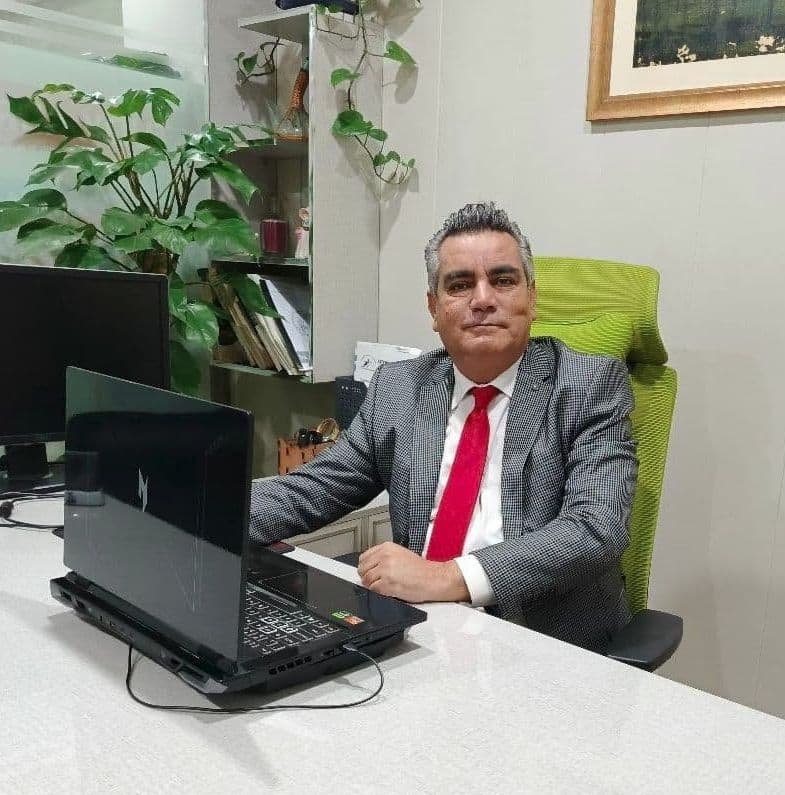
Author: Mubbashir Qureshi, CEO, MTZ Global Visa Consultants Pvt Ltd. 25+ years personal experience guiding Pakistani students into study abroad and international education.
Last verified: 13 June 2026. Next review: 13 December 2026.