Why families trust MTZ with scholarships applications
MTZ is a SECP-registered, ISO 9001:2015 certified Pakistani consultancy whose counsellors are British Council certified, led by a CEO with 25+ years of personal experience guiding Pakistani students abroad.

ISO 9001:2015 Certified

SECP Registered

British Council Certified Counsellors

25+ Years of CEO Experience
Spotted an error on this page? WhatsApp +92 315 155 5507. MTZ corrects verified errors within 24 hours.
quick answer
Can Pakistani students get a scholarship to study in Norway?
Yes, but Norway has no single government scholarship a Pakistani student can apply to directly. Since autumn 2023, non-EU students pay tuition at public universities. The one fully funded route is a PhD position, which Norway treats as a salaried job. Master’s applicants can pursue a university fee waiver after admission. The old Quota Scheme ended in 2016.
Norway scholarships at a glance
Here is the honest snapshot for a Pakistani applicant in 2026: one fully funded route that works, a master’s route that depends on each university, and a set of verified costs you must plan for.
The route that fully funds you: a salaried PhD position. Norway treats PhD candidates as employees, not fee-paying students.
PhD pay: around NOK 500,000 to 550,000 per year, gross. Set on the Norwegian state pay scale and updated each year.
Master’s at public universities: tuition-paying for non-EU students since autumn 2023. There is no longer a free public master’s for Pakistani students.
The 2025 fee reform: from June 2025, universities may set their own fees for non-EU students, and some have reduced fees for the 2026 to 2027 year. Fees now differ by university, so verify the live figure with your target university.
Government scholarship for individuals: none. The Quota Scheme ended in 2016. NORSTIP is institution-only and is closed to new applicants from the 2026 budget year.
Living-cost proof for the study permit (2026 to 2027 year): NOK 170,368 per year, about NOK 15,488 per month, required by UDI. PhD candidates are exempt because they earn a salary.
Study permit fee: NOK 6,300, paid to UDI.
Semester fee: about NOK 1,000 per semester to the student welfare body (Samskipnad).
Language: IELTS or TOEFL, or a Medium of Instruction letter where your previous degree was taught in English. Confirm per programme.
Work rights: up to 20 hours per week during term, full-time during holidays.
Intake: mainly autumn for master’s; PhD positions are advertised year-round on Jobbnorge.
MTZ role: guidance and application support only. MTZ does not award or guarantee any scholarship.
Your real routes to funded study in Norway
A Pakistani student has three honest routes into Norway: a salaried PhD position that pays a full wage, a university master’s fee waiver applied for after admission, and self-funded study now that several universities are cutting their non-EU fees. Only the PhD route is fully funded by design.

Route 1: The salaried PhD position
This is the one route that fully funds you, because Norway hires PhD candidates as employees rather than charging them tuition. A doctoral post pays roughly NOK 500,000 to 550,000 per year gross on the state pay scale, with pension, paid leave and full employee rights, and the salary is updated each year. You apply to a specific advertised vacancy the way you apply for any job, with a CV, a cover letter, a research proposal and references, and you usually need a named supervisor before you apply. Posts are advertised year-round, not on a single deadline, so you watch the listings continuously. A completed master’s degree is required.
Route 2: University master’s scholarships and fee waivers
Since the 2023 fee change, a master’s place at a public university charges non-EU students tuition, so the funded master’s route now runs through each university’s own scholarship or fee-waiver scheme, applied for after or alongside admission. Several institutions run their own awards, for example the University of Oslo, NTNU, the University of Bergen and the private BI Norwegian Business School. Amounts, coverage and eligibility differ by university and by programme, and some schemes are partial rather than full, so you confirm the current award on the university’s own scholarship page before you count on it. There is no central master’s scholarship that covers every Norwegian university.
Verify each award on the university’s own scholarship page:
Route 3: Self-funded study under Norway’s new fee rules
If no waiver covers you, self-funded study is the realistic master’s route, and it became cheaper for some students in 2025. From June 2025 the government let universities set their own non-EU fees instead of a national minimum, and institutions such as Nord University and NTNU announced fee reductions for the 2026 to 2027 year. Fees now sit between roughly NOK 80,000 and NOK 180,000 per year depending on the university and the subject, so the cost depends entirely on where you apply. You still show living-cost funds for the study permit on top of any tuition. This is not a scholarship, and the page treats it honestly as the paid option, not as free study.
Who can apply, and how Pakistani applicants apply
A Pakistani citizen is eligible for a Norwegian PhD post and for most university master’s awards, with the route deciding the bar: a PhD needs a completed master’s and a supervisor, while a master’s award needs admission first. There is no central application and no embassy nomination.
Pakistani citizens are non-EU, so since autumn 2023 you pay tuition for a Bachelor’s or master’s at a public university unless a waiver covers you. EU, EEA and Swiss citizens still study free; you do not fall in that group. PhD candidates pay no tuition because they are employees, and exchange students pay no tuition because their home university handles fees. Nationality decides which of these you are, and as a degree-seeking Pakistani student you are in the fee-paying group for a Bachelor’s or master’s.
For a PhD you need a completed master’s degree, normally a strong one. NTNU, for example, expects a master’s-level weighted average around B or higher and requires you to find a supervisor before you apply. For a master’s place you need a recognised Bachelor’s degree plus any subject prerequisites the programme lists, such as specific mathematics for an engineering master’s. Always read the programme page, because the general admission bar only gets you through the first gate.
Most English-taught programmes accept IELTS or TOEFL, and many accept a Medium of Instruction letter where your previous degree was taught in English, which is why some Pakistani applicants qualify without sitting IELTS. The accepted scores and whether an MOI letter is allowed are set by each programme, so confirm the rule on the programme page before you decide your test plan.
There is no single portal and no sending partner for Norway, which is the detail that surprises most families. For a PhD you apply to individual job vacancies on Jobbnorge, one at a time. For a master’s you apply for admission first through the university’s own portal, then apply for that university’s scholarship or fee waiver. Bachelor’s admission goes through the national Samordna Opptak system. You manage several separate timelines yourself, so starting early matters more here than in countries with one central deadline.
PhD funding is tied to a specific advertised project, so your field must match an open post; there is no general field restriction beyond that. For master’s awards, each scheme sets its own field focus, so check the scheme. On age, no general age limit is published for PhD posts or university scholarships, so verify any age condition from the official source rather than assuming one. The enquiry form carries no age cutoff.
How Norway’s 2023 fee change affects your plan
The single fact that shapes every Norway plan is that autumn 2023 ended free public study for non-EU students, and a 2025 reform has since made fees vary by university rather than disappear. Norway is not free again, so plan around the fee, not around the old myth.

The change (2023)
Norway’s parliament introduced tuition fees for non-EU, non-EEA and non-Swiss students from the autumn 2023 semester, ending universal free study. Students who began before autumn 2023 kept free study to the end of their programme, but every new Pakistani applicant since then pays. After the change, new non-EU degree enrolments fell by about 80 per cent, which tells you how real the cost barrier is.
The 2025 reform (still moving)
In June 2025 the government said institutions no longer had to charge fees that fully cover costs, and could set their own non-EU fee levels, including down to zero if they choose. The word is “can”, not “must”, and there is no central order to remove fees, so each university decides on its own timeline. Some have cut fees for the 2026 to 2027 year; others have held them. Because of this, the only safe figure is the one published by your target university for your start year, so verify the live fee before you commit.
Verify the policy position and the official cost figures here:
The documents you submit
The document set differs by route: a PhD application is a job application built around a research proposal, while a master’s place needs academic papers plus a separate study-permit file for UDI. Below is the verified list of what you submit, kept to what the official sources confirm.
For a PhD position
⚫ A completed master’s degree certificate and full transcripts
⚫ An academic CV
⚫ A cover letter for the specific vacancy
⚫ A research proposal or project outline, where the post asks for one
⚫ Reference letters, usually two
⚫ Proof of English proficiency: an IELTS or TOEFL score, or a Medium of Instruction letter where your degree was English-taught
⚫ A valid passport
⚫ A recognition assessment of your foreign qualification (for example a NOKUT assessment) or a diploma supplement, where the university requests it
For a master’s place and the study permit
⚫ A recognised Bachelor’s degree certificate and full transcripts
⚫ Proof of English proficiency: IELTS, TOEFL or a Medium of Instruction letter, per the programme rule
⚫ A motivation letter
⚫ A valid passport
⚫ Your admission letter (needed before you apply for the permit)
⚫ Proof of funds for the study permit: living-cost funds and, where the programme charges tuition, the tuition amount on top
⚫ Proof of accommodation
⚫ Valid health insurance for your stay
⚫ The UDI study-permit application and its fee
What each route actually covers
Only the PhD route covers everything, because it pays you a salary instead of charging tuition; a master’s waiver covers tuition in full or in part depending on the university, and self-funded study covers nothing on its own. Here is the honest split in Norwegian kroner, the scheme’s own currency.
Covered (the PhD route)
⚫ A gross salary of roughly NOK 500,000 to 550,000 per year, set on the Norwegian state pay scale and updated yearly. Take-home pay is lower after Norwegian income tax.
⚫ No tuition, because a PhD candidate is an employee, not a fee-paying student
⚫ Full employee benefits: pension contributions, paid leave and welfare cover
⚫ Exemption from the UDI living-cost proof, because your salary covers you
Covered in part or in full (a university master’s waiver)
⚫ Tuition, either fully waived or reduced, depending on the university’s own scheme.
⚫ Some schemes add a stipend; most do not. Confirm coverage on the university’s scholarship page, because amounts differ and many awards are partial.
Not covered, the honest part:
⚫ Your living costs on a master’s place: you must still show the UDI figure of NOK 170,368 per year, about NOK 15,488 per month, for the 2026 to 2027 year
⚫ Tuition on a self-funded master’s: roughly NOK 80,000 to 180,000 per year, varying by university and subject under the 2025 fee rules
⚫ The study-permit fee of NOK 6,300 and the semester fee of about NOK 1,000 per semester
⚫ Health insurance and travel, which you arrange yourself
PhD posts are competitive and tied to a funded project, master’s waivers are limited and often partial, and self-funded study is not a scholarship. MTZ does not award or guarantee any scholarship; the funders and universities decide.
All figures are in Norwegian kroner, the scheme’s own currency. Any rupee figure you work out is indicative only, because the NOK to PKR rate moves over a multi-year plan. Use a conservative rate and confirm the live rate before any payment. WhatsApp MTZ Islamabad or Lahore for a current PKR breakdown before you make a payment decision.
How to apply from Pakistan, step by step
There is no single Norway application and no embassy nomination, so you run the process yourself, one university or one vacancy at a time. These five steps keep the order straight; the documents for each step sit in the section above.

step-1 →
Choose your route and shortlist your targets.
Decide whether you are aiming for a salaried PhD post or a master’s place, then build a shortlist. For a PhD, shortlist open projects in your field. For a master’s, shortlist universities and check each one’s current fee and its own scholarship or fee-waiver scheme. The route you pick decides everything that follows.
step-2 →
Check the eligibility and language rule for each target.
Read the programme or vacancy page and confirm the academic bar and whether it accepts IELTS, TOEFL or a Medium of Instruction letter. Norway sets these per programme, so two universities can ask for different things.
step-3 →
Apply to the vacancy or to the admission.
For a PhD, apply to individual posts on Jobbnorge as they appear, since they run year-round with their own deadlines. For a master’s, apply for admission through the university’s own portal; the autumn intake is the main one and its admission window usually runs across the winter and early spring before an autumn start. Bachelor’s admission goes through the national Samordna Opptak system. MTZ confirms the live dates for your chosen university and intake.
step-4 →
Secure your funding.
For a PhD, the job offer is the funding, so there is no separate scholarship step. For a master’s, apply for that university’s waiver where one exists, or arrange your self-funding, then prepare the documents listed in the section above. MTZ confirms the live scholarship windows for your shortlist.
step-5
Apply for the UDI study permit.
Once you hold an admission letter, apply to UDI for the study permit, pay the NOK 6,300 fee, show your proof of funds and accommodation, and book your biometrics through the visa centre. Processing usually takes one to three months, so apply as soon as your admission letter arrives. PhD candidates apply as salaried hires and are exempt from the living-cost proof. MTZ confirms the live permit steps and current requirements at the time you apply.
How MTZ helps you apply
MTZ guides you through Norway’s scattered, university-by-university process, but does not award, fund or guarantee any place; the universities and the PhD hiring panels decide. Here is the practical help MTZ gives at each step.
MTZ reviews your degree, grades, field and English standing against the route that fits you, the salaried PhD post or a master’s place, and tells you plainly where you stand. If Norway is the wrong fit for your profile or budget, MTZ says so rather than pushing the application.
MTZ shortlists the universities and the open PhD projects that match your field, then checks each one’s current fee, its own scholarship or fee-waiver scheme, and its language rule. Because Norwegian fees and awards now differ by university, this matching is where most of the work sits.
MTZ helps you build the file each route needs: the CV, research proposal and cover letter for a PhD vacancy, or the transcripts, motivation letter and English evidence for a master’s admission. MTZ does not write false claims or invent documents; the work is making your real record clear and complete.
MTZ helps you submit to the right place for each target, a Jobbnorge vacancy for a PhD or a university portal for a master’s, and tracks your separate deadlines so none slips. You stay the applicant on every submission.
Once you hold an admission letter, MTZ guides the UDI study-permit application, the proof-of-funds arrangement and the biometrics booking, and flags the common reasons applications stall. You enter your own financial and personal details yourself; MTZ does not enter them for you.
Start with the free scholarship eligibility assessment:
What Norway does not fund, said plainly
Most “Norway scholarship” lists online are padded with schemes that no longer exist, so here is the honest limit: there is no Norwegian government scholarship a Pakistani individual can apply to today, and the routes that work are the PhD post and the university waivers above. MTZ does not award or guarantee any scholarship.
The schemes you will see listed that do not help you
The Quota Scheme
Ended in 2016. It funded students from developing countries, but it has been closed for nearly a decade. If a website lists it as available, that page is out of date.
NORSTIP
Pakistan is on its partner-country list, but it does not work for an individual applicant. Recipients are recruited only through an agreement between a Norwegian institution and your home institution, applications from individual students are not possible, and the scheme is limited to those aged 20 to 30 without a previous master’s. The Ministry of Foreign Affairs has confirmed no new calls for applications from the 2026 budget year, so it is closing to new students.
Lanekassen
The Norwegian state loan fund mainly serves Norwegian citizens and residents, so it is not a funding route for a degree-seeking Pakistani applicant.
Erasmus Mundus
A real EU route, but it is a separate scheme handled on the MTZ Europe scholarships page, not a Norway-specific award. See that page if a Norwegian university is one of your joint-master’s partners.
The honest bottom line
Norway rewards two things: a strong enough research profile to win a salaried PhD post, or a strong enough master’s profile to win a limited university waiver. If neither fits yet, self-funded study under the lower 2025 fees is the remaining option, and that is a cost, not a scholarship.
Compare your three routes side by side
The three Norway routes differ sharply on funding, level and difficulty, so this table puts them next to each other to help you pick honestly: the PhD post is the only one funded in full, the master’s waiver is partial and limited, and self-funded study is open to most but pays for itself.
| What matters to you | Salaried PhD position | University master’s waiver | Self-funded master’s |
|---|---|---|---|
| Level | Doctoral (PhD) | Master’s | Master’s |
| Funding | Full. A salary, roughly NOK 500,000 to 550,000 per year gross, plus benefits | Partial to full tuition, varies by university; a stipend only on some schemes | None. You pay tuition and living costs |
| Tuition you pay | None (you are an employee) | Waived in full or in part | Roughly NOK 80,000 to 180,000 per year, varies by university and subject |
| Entry bar | A completed master’s, a strong record, and a named supervisor | A recognised Bachelor’s, strong grades, and a competitive scholarship application | A recognised Bachelor’s and proof you can pay |
| Who decides | The hiring panel for a funded project | The university’s scholarship committee | The university admissions office |
| How you apply | To individual vacancies on Jobbnorge, year-round | Admission first, then the university’s own award | Admission, then self-funding |
| Living-cost proof for UDI | Exempt (you earn a salary) | Required: NOK 170,368 per year (2026 to 2027) | Required: NOK 170,368 per year, plus tuition |
| Realistic for | Strong research profiles | Strong master’s profiles, limited seats | Most admitted students who can fund themselves |
Reading the table honestly
If you can win a PhD post, it is the best-funded study route in Norway. If you cannot yet, a master’s waiver is worth trying but is limited and often partial, and self-funded study is the dependable fallback now that some universities have cut their fees. MTZ does not award or guarantee any of these; it helps you target the one you can actually win.
Norway scholarship questions Pakistani families ask
These are the questions Pakistani students and parents ask most about funding a Norway degree, answered with the verified position for 2026. Each answer leads with the direct reply; this wording is the source for the page’s FAQ schema.
No, not anymore for a Bachelor’s or master’s at a public university. Since autumn 2023, non-EU students, which includes Pakistani citizens, pay tuition. Free study now applies only to EU, EEA and Swiss citizens, to exchange students, and to PhD candidates, who pay no tuition because they are employees.
No. There is no Norwegian government scholarship that a Pakistani individual can apply to today. The old Quota Scheme ended in 2016, and the newer NORSTIP scheme is institution-only and closed to new applicants from the 2026 budget year. The routes that work are a salaried PhD position and university master’s fee waivers.
A salaried PhD position is the fully funded route. Norway treats PhD candidates as employees, so you pay no tuition and earn a gross salary of roughly NOK 500,000 to 550,000 per year with full benefits. You need a completed master’s degree and a named supervisor, and you apply to advertised vacancies.
You apply to individual PhD vacancies on Jobbnorge, the official recruitment portal, the way you apply for any job. You submit a CV, a cover letter, a research proposal where asked, and references, and you usually contact a supervisor first. Posts are advertised year-round, so there is no single deadline.
Sometimes, through the university’s own scheme rather than a national one. Universities such as the University of Oslo, NTNU, the University of Bergen and the private BI Norwegian Business School run their own awards, which may be full or partial. You apply after or alongside admission, and you confirm the current award on the university’s own scholarship page.
Roughly NOK 80,000 to 180,000 per year, depending on the university and the subject. After the June 2025 reform, universities set their own non-EU fees, and some, such as Nord University and NTNU, cut fees for the 2026 to 2027 year. Because the figure now varies, confirm the live fee on your target university’s page.
Not always. Many English-taught programmes accept IELTS or TOEFL, and many also accept a Medium of Instruction letter where your previous degree was taught in English. Each programme sets its own rule, so check the programme page before you plan your test.
NOK 170,368 per year, about NOK 15,488 per month, for the 2026 to 2027 year, as required by UDI for living costs. If your programme charges tuition, you show that amount on top. PhD candidates are exempt because their salary covers them. The study-permit fee is NOK 6,300.
No general age limit is published for PhD positions or for university scholarships, so you should verify any age condition from the official source rather than assume one. The only published age rule belonged to the NORSTIP scheme, aged 20 to 30, and that scheme is closing to new applicants.
It ended in 2016 and has been closed for nearly a decade. Many scholarship websites still list it as available, but those pages are out of date. There is no replacement that an individual Pakistani student can apply to directly.
Yes, up to 20 hours per week during term and full-time during holidays, subject to your permit conditions. Part-time work helps with living costs, but you cannot count it toward the proof of funds at the permit-application stage, so plan your funding without relying on it.
The most common choices for international students are the University of Oslo, NTNU in Trondheim, the University of Bergen, the Arctic University of Norway in Tromso, and the private BI Norwegian Business School. Your choice should follow your field and each university’s current fee and scholarship position, which differ since the 2023 change.
No. MTZ does not award, fund or guarantee any scholarship or admission. The PhD hiring panels and the university committees decide. MTZ assesses your profile honestly, shortlists the routes you can realistically win, and helps you build and submit a strong application.
It depends on your route. For a strong research profile, a salaried PhD post is one of the best-funded study options anywhere. For a master’s, you weigh a limited waiver or the new lower self-funded fees against the high living costs. MTZ tells you honestly whether your profile and budget fit before you apply.
Start your Norway application the honest way
Get a free, honest read on whether a salaried PhD post, a university master’s waiver, or self-funded study fits your profile and budget, then let MTZ help you build and submit a strong application. MTZ does not award or guarantee any scholarship.
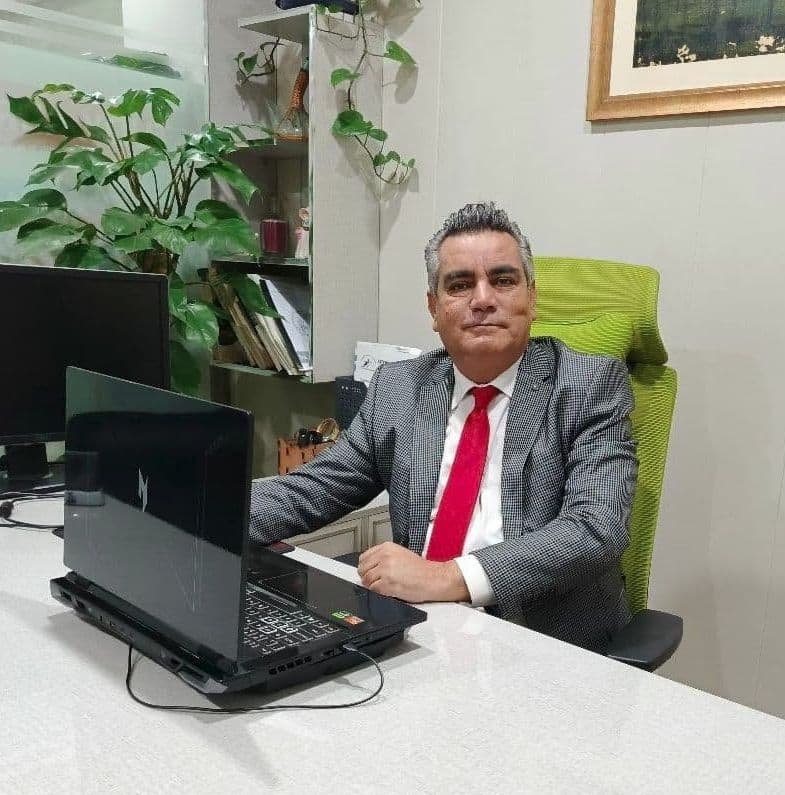
Author: Mubbashir Qureshi, CEO, MTZ Global Visa Consultants Pvt Ltd. 25+ years personal experience guiding Pakistani students into study abroad and international education.
This page was verified at official Norwegian sources, including UDI, Study in Norway, the Directorate for Higher Education and Skills, and the universities’ own pages, on 13 June 2026. Norwegian fee policy is changing under the 2025 reform, so confirm the current fee with your target university before you apply. Next review by 01 September 2026.