ISO 9001:2015 Certified

SECP Registered

British Council Certified Counsellors

25+ Years of CEO Experience
Spotted an error on this page? WhatsApp +92 315 155 5507. MTZ corrects verified errors within 24 hours.
quick answer
The Chevening scholarship is open to Pakistani citizens and fully funds a one-year Master’s in the UK, covering tuition, a monthly stipend, and return flights. You apply directly at chevening.org with three UK course choices and around two years of work experience. Pakistanis can also apply for the Commonwealth scholarship through the HEC, and the GREAT scholarship through individual UK universities.
At a Glance
These are the verified facts that decide whether a UK scholarship fits your profile. Every figure here comes from the official scheme source, checked on 11 June 2026.
Primary scheme
Chevening, funded by the UK Foreign, Commonwealth and Development Office and partner organisations
Level funded
one-year taught Master’s
What Chevening covers
full tuition (MBA contribution capped at £22,000), a monthly stipend, return flights, arrival and departure allowances, and one UK visa fee
Chevening work experience
2,800 hours, around two years, gained after your undergraduate degree
How you apply for Chevening
directly at chevening.org, with three eligible UK course choices and one unconditional offer by the stated July deadline
Chevening window
opens around August, closes around early October each year. The 2026-2027 cycle is closed; the next cycle is expected to open around August 2026
Second route, Commonwealth
Master’s and PhD, applied through the HEC e-portal and the Commonwealth Scholarship Commission portal together
Third route, GREAT
a minimum of £10,000 towards tuition for a one-year Master’s, applied directly to a participating UK university
Age limit
none is published by Chevening; verify the current position at the official source before you apply
Application fee
none on any of the three routes
Last verified
11 June 2026
The UK Government Scholarships You Can Apply For From Pakistan
Pakistani applicants have three real UK routes: Chevening for a fully funded Master’s, the Commonwealth scholarship for a funded Master’s or PhD, and the GREAT scholarship for a part-tuition Master’s award. Chevening is the largest and the focus of this page; the other two suit different profiles, so read each before you choose.

Chevening Scholarship
Chevening is the UK Government’s fully funded scholarship for a one-year taught Master’s, run by the Foreign, Commonwealth and Development Office (FCDO) and partner organisations since 1983. For Pakistani applicants it funds full tuition, a monthly stipend, return flights, arrival and departure allowances, and one UK visa fee. You apply directly, not through an agency, and you choose three eligible UK Master’s courses yourself. One honest limit matters up front: for MBA programmes Chevening caps its tuition contribution at £22,000, and you fund any amount above that. After your studies you commit to returning to Pakistan for at least two years.
Funder: UK FCDO and partners
Level: one-year taught Master’s.
Value: fully funded (MBA tuition capped at £22,000).
Apply: directly at the official Chevening site. given a link below.
Commonwealth Scholarship
The Commonwealth scholarship funds a Master’s or a PhD in the UK and is decided by the Commonwealth Scholarship Commission (CSC), funded by the UK FCDO. Pakistan is an eligible country, and the route runs through the Higher Education Commission (HEC) as the national nominating agency. The award is for talented applicants who could not otherwise afford UK study, so it weighs financial need alongside merit. It covers tuition, return airfare, and a monthly living allowance. The part that catches people out is the dual application: you complete both the HEC e-portal and the CSC online portal, and missing either one removes you from consideration.
Funder: UK FCDO via the CSC
Level: Master’s and PhD.
Value: fully funded.
Apply: HEC e-portal and the CSC portal together, with HEC as your nominating agency.
GREAT Scholarship
The GREAT scholarship is a part-tuition award of at least £10,000 towards a one-year taught Master’s, funded jointly by the UK Government’s GREAT Britain Campaign and the British Council with participating UK universities. For the 2026-2027 year the British Council lists 12 postgraduate GREAT scholarships for Pakistani students across participating institutions. This one is not fully funded: it reduces your tuition, and you cover living costs and the rest of the fees yourself. There is no central application. You apply directly to a participating UK university once you hold an offer, and each university sets its own deadline and award value, with at least one offering more than the £10,000 minimum.
Funder: GREAT Britain Campaign and the British Council.
Level: one-year taught Master’s.
Value: minimum £10,000 towards tuition only.
Apply: directly to a participating UK university after you hold an offer.
Who Can Apply: Eligibility
Eligibility differs across the three routes, so check each rule against your own profile before you spend time on an application. The points below are verified from the official scheme sources on 11 June 2026.
Each route is open to Pakistani nationals, with different conditions. Chevening requires you to be a Pakistani citizen, to not hold UK settlement, and to commit to returning to Pakistan for at least two years after your course; dual nationals may apply as long as the second nationality is not British. The Commonwealth scholarship is open to Pakistani and Azad Jammu and Kashmir nationals who are permanent residents, and dual nationals are not eligible. The GREAT scholarship requires you to be a Pakistani passport holder and permanent resident.
You need a strong undergraduate result for all three, with the bar set differently. Chevening asks for an undergraduate degree that qualifies you for a UK Master’s, and a four-year Pakistani Bachelor’s normally maps to the UK upper second-class (2:1) standard. The Commonwealth Master’s route asks for a first-division Bachelor’s or Master’s (16 years of education), and the PhD route asks for a first-division Master’s, MS, or MPhil (17 or 18 years). For a GREAT scholarship you must meet the entry requirement of the specific UK course, which is set by each university.
None of the three runs its own English test; you meet the English requirement of the UK university that offers you a place. Chevening, Commonwealth, and GREAT all rely on the university’s own language condition, which usually means IELTS or an equivalent. Some UK universities accept a Medium of Instruction letter instead of IELTS, so confirm the exact rule with each university on your shortlist before you assume you are exempt.
This is where the routes split most sharply. Chevening requires 2,800 hours of work experience, roughly two years, gained after your undergraduate graduation, and you apply directly at chevening.org with three eligible UK course choices, holding at least one unconditional offer by the stated July deadline. The Commonwealth scholarship sets no Chevening-style hours rule but runs through a dual application: you submit on the HEC e-portal and the CSC portal together, with HEC as your nominating agency, and you sit the HEC Aptitude Test (HAT). The GREAT scholarship asks for no work experience; you apply straight to a participating UK university after you receive an offer.
All three fund taught study, with limits worth knowing. Chevening funds a one-year taught Master’s in any subject and does not fund PhDs, research-only master’s, part-time study, or distance learning. The Commonwealth scholarship funds both a Master’s and a PhD, with priority for fields linked to development. The GREAT scholarship funds a one-year taught Master’s, and the subjects available depend on the participating university you apply to.
None of the three schemes publishes a fixed age cut-off in its official rules. Do not rely on an age figure you read on a third-party site. Confirm the current position directly with the official scheme source before you apply, and note that the MTZ enquiry form does not ask for an age cut-off.
Documents You’ll Need
The document set differs by route, so prepare the right list before the window opens rather than scrambling at the deadline. Everything below is what you submit; who qualifies is covered in the eligibility section above. These lists are verified from the official scheme sources on 11 June 2026.
For Chevening:
1- Passport or national identity document
2- Academic transcripts and your degree certificate
3- Two references
4- At least one unconditional UK Master’s offer, required by the stated July deadline
5- Your written application answers on leadership, networking, course choice, and career plan
For the Commonwealth scholarship (submitted on both the HEC and CSC portals):
1- HEC-attested academic documents, CNIC, and domicile
2- Your HEC Aptitude Test (HAT) result
3- All university transcripts and degree certificates
4- Two to three references
5- A personal statement and a development impact statement
6- For the PhD route only, a supporting statement from your proposed UK supervisor
For the GREAT scholarship:
1- A valid Pakistani passport
2- An offer (conditional or unconditional) from the participating UK university
3- That university’s own GREAT application form, which often includes short written answers of around 250 words each
What These Scholarships Cover
Chevening and the Commonwealth scholarship are fully funded; the GREAT scholarship is a part-tuition award, so treat it as a discount rather than a free degree. The figures below are pound sterling amounts taken from each official source.
Chevening
[Covered]
Full tuition fees, with one limit: for an MBA, Chevening caps its tuition contribution at £22,000 and you fund any amount above that
A monthly living stipend, paid at a higher rate for London than for the rest of the UK, with rates reviewed each year
Economy return airfare between Pakistan and the UK
An arrival allowance and a homeward departure allowance
The cost of one UK visa application
A travel grant to attend Chevening events in the UK
Commonwealth
[Covered]
Tuition fees in full
Return economy airfare
A monthly living allowance, plus the standard CSC grants where they apply
GREAT
[Covered]
A minimum of £10,000 towards tuition for a one-year Master’s, with one participating university listing £15,000
[Not covered]
Any MBA tuition above the Chevening £22,000 cap, which you fund yourself
Living costs, remaining tuition, flights, and visa fees on the GREAT route, since GREAT only reduces tuition
Costs for family members or dependants travelling with you
Anything beyond the allowances each scheme lists in its own terms
These are pound sterling figures. Any rupee conversion is indicative only. Use a conservative rate, confirm the live rate before any financial decision, and WhatsApp MTZ Islamabad or Lahore for a current breakdown.
How to Apply From Pakistan
The application path depends on your route, and the single biggest mistake is using the wrong portal, so follow the right one from the start. The dates below follow the annual pattern; MTZ confirms the live dates each cycle.
step-1 →
Choose your route and your courses. Decide between Chevening, Commonwealth, and GREAT, or run more than one. For Chevening, pick three eligible UK Master’s courses. For GREAT, pick a participating UK university that offers the award for Pakistan.
step-2 →
Work toward your university offer. Apply to the UK universities and secure an offer. Chevening needs at least one unconditional offer by the stated July deadline. GREAT needs an offer before you can complete that university’s GREAT form.
step-3 →
Register on the correct portal. Chevening: the online system at chevening.org during the window that opens around August. Commonwealth: the HEC e-portal and the Commonwealth Scholarship Commission portal together, selecting HEC as your nominating agency, and sit the HEC Aptitude Test. GREAT: the participating university’s own application form.
step-4 →
Submit before the deadline. Chevening closes around early October. The Commonwealth HEC deadline usually falls in October. GREAT deadlines are set by each university and vary. The 2026-2027 Chevening cycle is closed; the next is expected to open around August 2026. MTZ confirms the live dates.
step-5
Interview and result. Chevening shortlists candidates for interview at the British High Commission in Islamabad, with results around June. Commonwealth results come from mid-June. GREAT universities notify successful applicants directly.
How MTZ Helps
MTZ does not award or decide any of these scholarships; what we do is make your own application stronger and stop the avoidable mistakes that sink good candidates. CEO Mubbashir Qureshi brings 25+ years of personal experience guiding Pakistani students into study abroad and international education, and that judgement runs through every stage below.
We read your profile against each route honestly before you invest months in an application. We look at your degree, your work experience hours, your target field, and your finances, then tell you which of Chevening, Commonwealth, or GREAT actually fits, or whether to wait a year and apply stronger.
We help you pick courses that satisfy both the scholarship rule and your career plan. For Chevening that means three eligible UK Master’s choices that hold together as a coherent story. For GREAT it means a participating university where you have a real chance of an offer.
We work through your transcripts, references, and personal statements so the set is complete and consistent. For Commonwealth we map the dual HEC and CSC submission so neither portal is left half-finished, and we keep your development impact statement focused.
We track the live dates for each cycle and keep your submission on schedule. You know which portal closes when, what the current deadline is, and what is still outstanding, so nothing lapses while you wait on an offer letter.
If you win an award, our UK student visa team handles the next step. We guide your UK Student Route visa from Pakistan, the CAS letter, and the financial evidence, so the scholarship turns into an actual enrolment.
The Honest Limits
Read this before you apply: these scholarships are won on merit by the funders, not bought through any consultant, and MTZ cannot change that. We would rather you go in with clear eyes than with false hope.
MTZ does not award, influence, or guarantee any Chevening, Commonwealth, or GREAT scholarship. The funders alone decide, and a strong application can still miss out.
Competition is heavy. Pakistan is among the countries that send the most Chevening applications each year, so meeting the criteria is the floor, not a likely win.
Chevening is fully funded, but the MBA tuition contribution is capped at £22,000 and you fund any excess yourself.
The GREAT scholarship is part funding only. It reduces your tuition by a minimum of £10,000 and leaves living costs, flights, visa fees, and the rest of the tuition to you.
Cycles open and close on fixed annual windows. A closed cycle cannot be reopened, and the 2026-2027 Chevening window has already closed.
No scheme here publishes an age cut-off, and no consultant can invent eligibility you do not have. We will tell you honestly if a route does not fit this year.
Chevening vs Commonwealth vs GREAT
Use this table to see at a glance which route matches your level, your experience, and how much funding you actually need. Every cell is verified from the official scheme source on 11 June 2026.
| Feature | Chevening | Commonwealth | GREAT |
|---|---|---|---|
| Funder | UK FCDO and partners | UK FCDO via the CSC | GREAT Britain Campaign and British Council |
| Level | One-year taught Master’s | Master’s and PhD | One-year taught Master’s |
| Funding depth | Fully funded (MBA tuition capped at £22,000) | Fully funded | Part tuition, minimum £10,000 |
| Work experience | 2,800 hours, around two years | No fixed hours rule | None |
| How you apply from Pakistan | Directly at chevening.org, three course choices | HEC e-portal and CSC portal together, plus HAT | Directly to a participating UK university |
| Return-home rule | Two years in Pakistan after study | Set by CSC terms | No Chevening-style rule |
| Best for | Future leaders with work experience wanting full funding | Master’s or PhD applicants who also show financial need | Strong applicants who need part-tuition help for a Master’s |
Frequently Asked Questions
These are the questions Pakistani applicants ask most about UK scholarships, answered from the official sources and checked on 11 June 2026.
Yes. Pakistani citizens can apply for the Chevening scholarship, and Pakistan is one of the countries that sends the most applications each year. You must commit to returning to Pakistan for at least two years after your course and must not hold UK settlement.
Yes, Chevening is fully funded. It covers full tuition fees, a monthly living stipend, return economy flights, arrival and departure allowances, and one UK visa fee. The one limit is the MBA tuition contribution, which Chevening caps at £22,000.
You need 2,800 hours of work experience, which is roughly two years of full-time work. It can be full-time, part-time, voluntary, or internship work, and only experience gained after your undergraduate graduation counts.
You meet the English requirement of the UK university that offers you a place, not a separate scholarship test. That usually means IELTS or an equivalent. Some UK universities accept a Medium of Instruction letter instead, so confirm the exact rule with each university on your shortlist.
Chevening funds a one-year Master’s, asks for around two years of work experience, and is applied for directly. The Commonwealth scholarship funds a Master’s or a PhD, weighs financial need, and is applied for through both the HEC and the Commonwealth Scholarship Commission portals together.
You apply through two portals at once: the HEC e-portal and the Commonwealth Scholarship Commission portal, selecting HEC as your nominating agency. You also sit the HEC Aptitude Test. Missing either portal removes you from consideration, so complete both before the deadline.
The GREAT scholarship covers a minimum of £10,000 towards tuition for a one-year Master’s, and one participating university lists £15,000. It is part funding only, so you pay your living costs, flights, visa fees, and any tuition above the award yourself.
None of the three schemes publishes a fixed age limit in its official rules. Do not rely on an age figure from a third-party site. Confirm the current position directly with the official scheme source before you apply.
Yes, you can pursue more than one route in the same year, as each has its own application and timeline. Just track the separate portals and deadlines carefully, because they do not run on the same calendar.
Yes, but with a cap. Chevening funds a one-year MBA, and its tuition contribution is capped at £22,000. If your MBA costs more, you fund the difference yourself, and the interview may ask how you plan to cover it.
Chevening follows an annual pattern: the window opens around August and closes around early October, with one unconditional UK offer required by the July deadline. The 2026-2027 cycle is closed, and the next is expected to open around August 2026. MTZ confirms the live dates each cycle.
You apply to three eligible UK Master’s courses, and you must hold at least one unconditional offer by the stated July deadline. You can start your Chevening application before the offer arrives, but the unconditional offer must be in place by that deadline.
The Commonwealth scholarship funds a PhD as well as a Master’s. Chevening and the GREAT scholarship fund a one-year taught Master’s only and do not cover PhD study, so a PhD applicant should look at the Commonwealth route.
No. MTZ does not award or guarantee any Chevening, Commonwealth, or GREAT scholarship; the funders alone decide. What MTZ does is assess your profile honestly, match your courses, build a complete application, and tell you plainly if a route does not fit this year.
Apply for a UK Scholarship With MTZ
Start with an honest read of your profile. Send us your degree, your work experience, and your target field, and we will tell you which UK route fits and how to make your application compete. MTZ does not award or guarantee any scholarship.
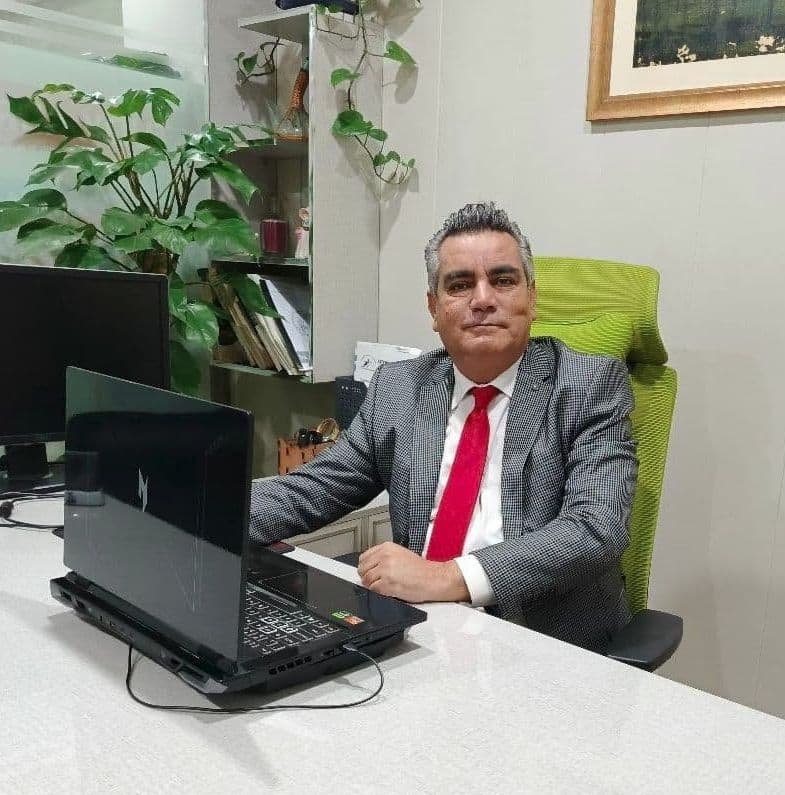
Author: Mubbashir Qureshi, CEO, MTZ Global Visa Consultants Pvt Ltd. 25+ years personal experience guiding Pakistani students into study abroad and international education.
This page was last verified against official scheme sources on 11 June 2026. Spotted an error? WhatsApp +92 315 155 5507, and MTZ corrects verified errors within 24 hours.